
Table of Contents
- What Makes a Music Artist Apparel Website Worth Buying From
- Where to Find Official Band Merchandise Online
- How Limited-Edition Band Merch Drops Actually Work
- Artist Merch Websites Compared: Shirts, Hoodies, and Pricing
- Shipping, Returns, and International Availability
- Resale Value and Collectible Potential of Artist Apparel
- Frequently Asked Questions
Last Updated: October 5, 2026
What Makes a Music Artist Apparel Website Worth Buying From
Shopping for best websites for limited edition music artist apparel comes down to one thing: whether the store can prove its gear is official. At Marvin Chambers Music, we build our own merch on that principle, and we judge every other store by it too.

Authenticity is the dividing line. Everything else, fit, fabric, shipping, resale value, flows from it.
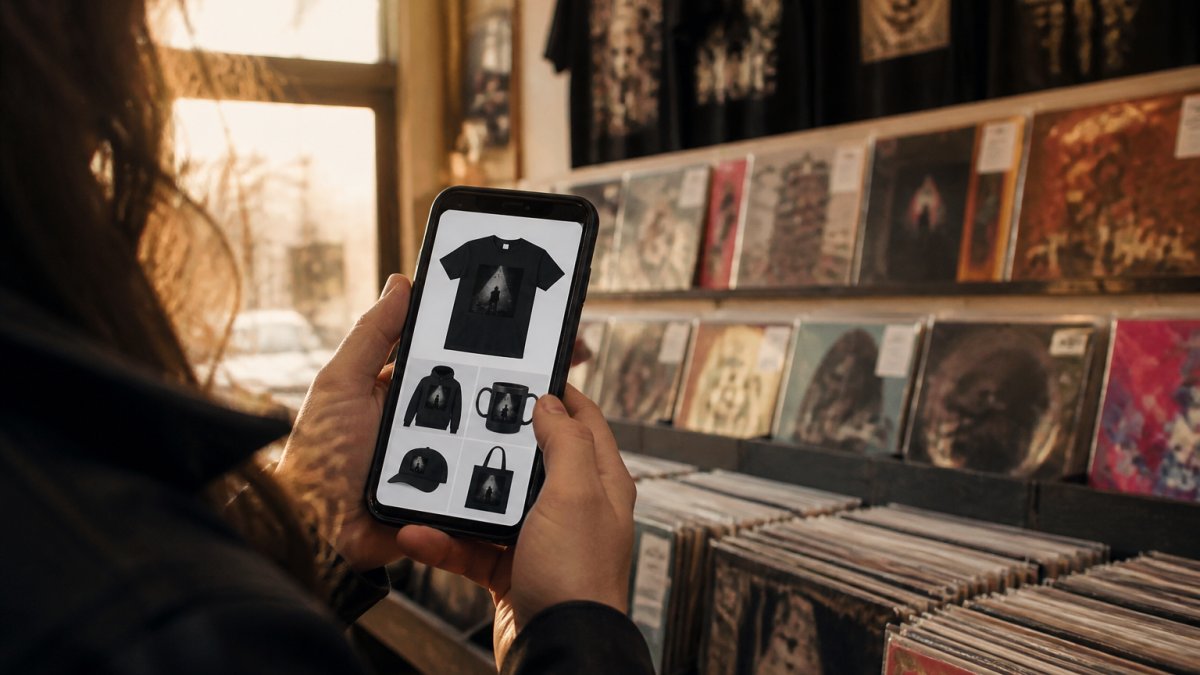
Authenticity Checks Before You Add to Cart
Official merchandise is apparel or accessories produced with the artist's or label's permission, often through a licensing agreement, and sold through a store the artist actually endorses. That definition matters because "official" is one of the most abused words in online retail.
Before you check out, run four checks:
- Licensing line: Look for a named licensor, copyright line, or trademark notice on the product page.
- Store linkage: The artist's own site, social profiles, or tour pages should point to the store.
- Product photography: Real garment shots from multiple angles beat floating mockups every time.
Where to Find Official Band Merchandise Online
The safest place to buy official band merchandise online is the artist's own direct-to-fan store. It is the only channel where the money reaches the artist and the product design is approved by them. Third-party marketplaces can be legitimate, but the burden of verification shifts to you.
That single distinction, who controls the store, explains most of the difference in quality, pricing, and customer service across the category.
Direct-to-Fan Stores vs. Third-Party Marketplaces
Direct-to-fan stores are run by the artist, their label, or a dedicated merch partner working under contract. Designs are approved, edition sizes are known, and restocks follow a plan.
Marketplaces host thousands of independent sellers under one roof. Some are licensed. Many are not.
| Store Type | Authenticity Risk | Design Control | Typical Return Window | Best For |
|---|---|---|---|---|
| Direct-to-fan store | Low | Artist-approved | Clearly stated on site | Collectors, gift buyers |
| Official label store | Low | Label-approved | Clearly stated on site | Multi-artist shoppers |
| Third-party marketplace | Higher | Seller-dependent | Varies by seller | Browsing, price hunting |
Our advice: use marketplaces to discover a design, then buy it from the artist's own store if it exists there.
How Limited-Edition Band Merch Drops Actually Work
A limited-edition band merch drop is a scheduled release of a fixed quantity of a specific design, usually tied to an album, tour, or anniversary. When the run sells out, it is often gone for good. That scarcity is the entire point, and it is also where most buyers get caught out.
Understanding the mechanics turns a stressful scramble into a straightforward purchase.
Edition Sizes, Release Dates, and Restock Policies
Three details decide whether a drop is worth your money:
- Edition size: A numbered run of 300 is a collector's item. An "limited" run that quietly restocks is marketing.
- Release date and time: Drops usually go live at a stated hour in a stated time zone. Convert it before you set an alarm.
- Restock policy: Reputable stores say plainly whether a sold-out design will return. Silence usually means no.
Artist Merch Websites Compared: Shirts, Hoodies, and Pricing
Comparing artist merch websites fairly means comparing like for like: fabric weight, print method, size range, and price. Most roundups skip this and just list stores. We would rather show you what the money actually buys, using our own catalogue as the reference point.
T-Shirts and Graphic Tees: Entry-Level Picks
T-shirts are where most fans start, and where quality varies most. Look at fabric content first. A 100% combed and ring-spun cotton tee holds a print far better than a thin blended blank, and pre-shrunk fabric avoids the classic one-size-down surprise after the first wash.
Our entry point is the MCM Logo Unisex Tee at $17.50, a pre-shrunk combed cotton shirt in Black Heather, Red, Tan, or White, sized XS to 5XL.

| Product | Price | Fabric | Sizes | Best For |
|---|---|---|---|---|
| Nightstand Bible Classic Tee | $14.50 | Soft cotton, taped neck | S-5XL | First merch purchase |
| MCM Logo Unisex Tee | $17.50 | Combed ring-spun cotton | XS-5XL | Everyday wear, gifting |
| Shooting Star Men's Premium Tee | $27.00 | Breathable cotton | S-3XL | Warm-weather staple |
| Spin It Back Long Sleeve Tee | $29.97 | Heavyweight cotton | S-3XL | Cool evenings, layering |
| Wear the Sound Women's Tee | $49.97 | Cotton-touch jersey | XS-2XL | Women's regular fit |
| Marvin Chambers Music Logo Tee | $55.99 | 100% cotton, drop shoulder | S-2XL | Statement logo piece |
Hoodies and Sweatshirts: Cold-Weather Layers
Hoodies carry the highest price and the highest expectations. Check the interior first. A brushed fleece lining and a double-lined hood separate a hoodie you keep for years from one that pills by spring.
The Official Marvin Chambers Music Logo Hoodie at $41.00 is our everyday pick: warm hood, roomy front pouch pocket, flat drawstrings, and a back patch finish, in Black or White from S to 3XL.
Shipping, Returns, and International Availability
Shipping and returns are where limited-edition buying gets genuinely risky. A print-on-demand or made-to-order item often cannot be exchanged for the same design, because there is no spare stock sitting in a warehouse. That means the purchase terms matter as much as the artwork.
Before ordering from any artist merch website, confirm four things in writing on the store's own site:
- Ships from: The origin warehouse or production partner. This determines both delivery time and whether you will owe import duties.
- Stated delivery window: A range in business days, not a vague "fast shipping" badge.
- Duties and customs: Whether the store prepays import taxes or leaves them to you on delivery. For international orders, an unpaid duty bill can add a significant percentage to your total after the fact.
If a store cannot answer those four in writing, that is your signal to look elsewhere.
Preorder Timelines and Made-to-Order Production
Limited-edition apparel often sells as a preorder: you pay now, the store produces after the drop closes, and the item ships weeks later.
A common pattern is a two-to-four-week production window after the preorder closes, followed by standard shipping. Reputable stores state that timeline on the product page before you pay. If a preorder page shows no production window, treat the delay as unknown.
International Availability and Practical Ordering
For international buyers, the practical move is to order early rather than cheaply. A drop that sells out in days does not wait for a slow shipping option, and a missed edition is rarely restocked.
Also check whether the store ships to your country at all before you fall in love with a design. Some artist stores restrict certain regions for licensing reasons, and that restriction is usually listed in the shipping policy rather than at checkout.
Returns on Limited Runs: What to Expect
Returns on limited-edition apparel are narrower than on general merchandise, and that is normal. Once a run sells out, there is no replacement size to send you. Most stores handle this in one of three ways:
- Size exchange only while stock lasts: Common on numbered runs. If your size is gone, you get a refund or store credit instead.
- Refund within a short window: Often 14 to 30 days, with tags attached and no signs of wear.
- Final sale on made-to-order items: Because the garment was produced specifically for your order, many stores do not accept returns unless the item arrives damaged or misprinted.
Before you buy, read the return policy on the specific product page, not just the site-wide footer. Limited-edition items frequently carry their own terms.
Resale Value and Collectible Potential of Artist Apparel
Not every shirt becomes a collectible, and treating every drop as an investment is a good way to lose money. Resale value in music apparel comes from three things: a small edition size, a design tied to a specific era or tour, and the item staying unworn. Understanding how those three interact is what separates a genuine collectible from a random secondhand tee.
What Actually Drives Resale Value
Edition size is the strongest signal. A numbered run of 300 with a printed edition card is a collector's item. An "limited" run that quietly restocks is marketing, and its resale value stays near retail.
A useful rule of thumb: if the store cannot tell you the edition size, assume there is no scarcity premium. Scarcity that is not documented is not scarcity.
How to Avoid Inflated Resale Listings
Resale platforms make it easy to list a common tee at a collector's price. Before you pay a premium, check three things:
- Original retail price: If the seller is asking several times what the store charged, confirm the edition was actually small and sold out.
- Edition documentation: A numbered card, a drop receipt, or a screenshot of the sold-out product page supports the asking price. A listing with no provenance is a gamble.
- Seller history and photos: Real garment photos from multiple angles, not stock mockups, and a seller with a track record. Counterfeit limited-edition apparel exists, and it usually shows up as a too-perfect listing at a too-low price.
The Honest Limitation
Most limited-edition apparel resells at or near what you paid. The exceptions are small, documented runs tied to a specific moment, and even those can take years to appreciate.
If resale matters to you, buy two. Wear one, keep one folded and unwashed with its tags.
Frequently Asked Questions
Where can I buy official band merchandise online?
The safest route is the artist's own storefront, where every item is produced under their brand and royalties go directly to them. Look for a shop linked from the artist's official website or verified social profiles. Marvin Chambers Music, for example, sells its full apparel range directly at marvinchambersmusic.com, including the MCM Logo Unisex Tee at 17.50 and the Official Logo Hoodie at 41.00. Third-party marketplaces can carry genuine stock, but confirm the seller is listed as an authorised supplier before ordering.
How can I tell if limited-edition artist apparel is official?
Check three things. First, the store should be reachable from the artist's own website or a verified social link. Second, limited-edition band merch should state the edition size and release date somewhere on the product page. Third, the product photography and sizing charts should match the rest of the artist's catalogue. If a listing shows no edition number, no release date, and no link back to the artist, treat it as unverified until you can confirm otherwise.
Do music artists sell exclusive clothing through their official websites?
Yes, and it is usually the only place to get it. Exclusive designs, tour merchandise, and limited-edition release items are typically held back from third-party retailers. Artist merch websites run these drops directly so fans get first access and the artist keeps more of the revenue. If you want a piece that will not appear everywhere else, the official store is the channel to watch.
How can I find out when a limited-edition merch drop goes live?
Sign up for the artist's email list and turn on notifications for their social accounts. Most drops are announced a few days ahead with a specific time. Some stores also publish a release calendar or a coming soon section. If you miss the window, check the product page for restock policies, since some limited runs are reissued while others are not.
What should I check before buying artist apparel from an overseas store?
Confirm the shipping cost and estimated delivery window before checkout, because international rates vary widely. Check the returns policy, including who pays return postage if the fit is wrong. Sizing is the other big one: compare the store's size chart against a garment you already own rather than assuming your usual size carries over. Marvin Chambers Music apparel runs from XS to 5XL on most tees, so there is room to size up or down.